Bachelor 1st and 2nd year
Avec cette formation en 1ère Année au Campus IC FOR MODELS à Paris, vous allez acquérir de l’expertise en management et, d’autre part, vous découvrirez l’univers du luxe au travers de cours pratiques sous forme d’ateliers, de sorties OUTSIDE CLASSES, de cours théoriques mais surtout des workshop spécifiques pour comprendre et évoluer dans cette industrie. Les cours peuvent être suivi en initial et en Alternance.

Useful links
ENROLLMENT
Rentrées : Septembre 2025 et Février 2026
Entry level for 1st year: BAC Minimum
Application form and individual interviews
Apprenticeship contract via partner CFA
En initial Formation payante 7850 € par an (aides et bourses apportées par l’école)
Degrees to Apply Within the Sectors Art & Culture
- Develop and implement a company's marketing and sales strategy.
- Manage a marketing and sales department
- Manage a sales team
- Develop and implement sales communications
- Understanding the luxury, fashion & beauty industry
List of contents IC FOR MODELS
1st year & 2nd year (600h)
Subject 1: Geopolitics of luxury (50h)
1 : Introduction à la Géopolitique du Luxe
– Définition du luxe et son évolution
– Introduction à la géopolitique et ses concepts clés
– Importance de la géopolitique dans l’industrie du luxe
2 : Histoire du Luxe et Géopolitique
– Évolution historique du luxe et son lien avec la géopolitique
– Les grandes puissances historiques et leur influence sur le luxe
– Cas d’étude : l’impact de la géopolitique sur les maisons de luxe emblématiques
3 : Géopolitique contemporaine et le Marché du Luxe
– Principaux acteurs géopolitiques dans l’industrie du luxe aujourd’hui
– Analyse des tendances géopolitiques influençant le marché du luxe
– Impact des conflits, sanctions internationales et alliances sur les marques de luxe
4 : Luxe et Soft Power
– Concept de soft power et son rôle dans la promotion du luxe
– Stratégies de soft power des marques de luxe et leur efficacité
– Influence culturelle, diplomatique et économique des marques de luxe
5 : Géopolitique du Commerce International du Luxe
– Barrières commerciales, accords commerciaux et leur impact sur le luxe
– Les enjeux géopolitiques liés à la production, distribution et vente de produits de luxe
– Stratégies d’expansion internationale des
marques de luxe et leurs implications géopolitiques
6 : Géopolitique et Durabilité dans l’Industrie du Luxe
– Tendances actuelles en matière de durabilité dans le luxe
– Initiatives écologiques et sociales des marques de luxe et leur impact géopolitique
– Défis et opportunités liés à la durabilité dans un contexte géopolitique
7 : Géopolitique du Luxe et Innovation
– L’importance de l’innovation dans l’industrie du luxe
– Influence des politiques gouvernementales, de la recherche et des technologies sur l’innovation dans le luxe
– Cas d’étude : Les innovations disruptives et leur impact sur la géopolitique du luxe
8 : Projet de Recherche et Présentation
– Réalisation d’un projet de recherche sur un aspect spécifique de la géopolitique du luxe
– Préparation et présentation des résultats devant la classe
– Discussion et débat sur les enjeux géopolitiques identifiés dans les projets de recherche
Méthodes d’Évaluation :
– Participation en classe : 20%
– Travaux écrits et Projets : 40%
– Présentation du Projet de Recherche : 20%
– Examen Final : 20%
Références Bibliographiques :
– « Luxury: History, Culture, Consumption », Ashok Som
– « Global Luxury Trends: Innovative Strategies for Emerging Markets », Emmanuella
Plakoyiannaki
– « The Power of Glamour: Longing and the Art of Visual Persuasion », Virginia Postrel
– Articles académiques et études de cas pertinents
Subject 2: Business environment (50h)
1 : Introduction à l’Environnement Économique
– Concepts de base en économie
– Compréhension de l’environnement économique global
– Analyse des principaux acteurs économiques et de leurs interactions
2 : Macroéconomie et Entreprise
– Indicateurs macroéconomiques clés et leur impact sur les entreprises
– Politiques économiques et leur influence sur l’environnement des affaires – Analyse des cycles économiques et prévisions économiques pour les entreprises
3 : Microéconomie et Prise de Décision en Entreprise
– Notions de base en microéconomie et leur application pratique
– Comportement des consommateurs et des entreprises sur les marchés
– Théorie de la firme et prise de décisions stratégiques en entreprise
4 : Environnement Concurrentiel
– Analyse de l’environnement concurrentiel des entreprises
– Stratégies concurrentielles et positionnement sur le marché
– Étude de cas : Analyse de la concurrence dans différents secteurs d’activité
5 : Globalisation et Entreprise
– Tendances de la mondialisation et ses implications pour les entreprises
– Stratégies d’internationalisation et gestion des risques liés à l’international
– Cas d’étude : Impact de la mondialisation sur les chaînes d’approvisionnement des entreprises
6 : Environnement Légal et Réglementaire
– Cadre juridique et réglementaire des affaires
– Éthique des affaires et responsabilité sociale des entreprises
– Cas pratiques : Conformité réglementaire et gestion des risques juridiques pour les entreprises
7 : Environnement Technologique et Innovation
– Impact de la technologie sur les modèles d’affaires des entreprises
– Stratégies technologiques et innovation dans un environnement économique changeant
– Étude de cas : Entreprises innovantes et leurs succès sur le marché
8 : Environnement Économique Futur
– Tendances économiques émergentes et leur impact sur les entreprises
– Préparation aux défis et opportunités de l’environnement économique futur
– Projection des prochaines tendances économiques et implicationspour les entreprises
Méthodes d’Évaluation :
– Examens écrits : 40%
– Travaux individuels et en groupe : 30%
– Participation en classe : 15%
– Étude de cas et projets appliqués : 15%
Références Bibliographiques :
– « Économie d’entreprise », David Besanko et Ronal Braeutigam
– « Microéconomie », Robert S. Pindyck et Daniel L. Rubinfeld
– « Macroéconomie », Olivier Blanchard – Articles académiques et revues spécialisées en économie et en gestion
Subject 3: Accounting (50h)
Subject 3: Accounting (50h)
Ce cours vise à introduire les étudiants aux principes fondamentaux de la comptabilité financière. Les étudiants apprendront à enregistrer, classer, analyser et présenter les transactions financières d’une entreprise conformément aux normes comptablesinternationales.
1. Introduction à la comptabilité :
– Concepts de base de la comptabilité
– Importance de la comptabilité dans la prise de décisions
2. Le cycle comptable :
– Principe de la partie double
– Enregistrement des opérations courantes : ventes, achats, trésorerie
3. Les états financiers :
– Bilan
– Compte de résultat
– Tableau de flux de trésorerie
4. Les opérations courantes en comptabilité :
– Stocks et coût des ventes
– Créances et dettes
– Méthodes d’inventaire
5. Les opérations de fin d’exercice :
– Ajustements comptables
– Clôture des comptes
6. Analyse financière :
– Ratios financiers
– Interprétation des états financiers
7. Normes comptables internationales (IFRS) :
– Principes de base
– Convergence des normes comptables
Méthodes d’Enseignement :
– Cours magistraux
– Études de cas
– Travaux pratiques sur logiciel comptable
– Travaux en groupe
Méthodes d’Évaluation :
– Examens écrits : 40%
– Travaux pratiques : 30%
– Participation en classe : 10%
– Projet final : 20%
Références :
– « Principes de Comptabilité », Paul D. Kimmel, Jerry J. Weygandt, Donald E. Kieso
– « Comptabilité financière, IFRS – 9e édition », Walter G. Kell, Donald E. Kieso, Paul D. Kimmel Ce syllabus est conçu pour offrir aux étudiants une base solide en comptabilité générale en couvrant les principaux concepts, outils et techniques nécessaires à la compréhension et à la pratique de la comptabilité financière. N’hésitez pas à le personnaliser en fonction des besoins spécifiques de votre cours et de vos apprenants.
Subject 4: Management basics (50h)
Ce cours vise à introduire les étudiants aux concepts fondamentaux du management et à développer leurs compétences en matière de prise de décisions, de communication, de leadership et de gestion des personnes et des ressources.
1. Introduction au Management :
– Définition du management
– Évolution du management
– Rôles et responsabilités du manager
2. Fonctions du Management :
– Planification
– Organisation
– Direction
– Contrôle
3. Styles de Leadership :
– Leadership autocratique
– Leadership participatif
– Leadership transformationnel
4. Communication en Management :
– Communication interpersonnelle
– Communication organisationnelle
– Rôle de la communication dans la gestion d’équipe
5. Gestion des Ressources Humaines :
– Recrutement et sélection du personnel
– Formation et développement des employés
– Évaluation de la performance
6. Gestion de Projet :
– Planification de projet
– Gestion de risques
– Suivi et évaluation
7. Gestion de la Qualité :
– Concepts de qualité
– Outils d’amélioration continue
– Certification ISO
Méthodes d’Enseignement :
– Cours magistraux
– Études de cas
– Jeux de rôles
– Travail d’équipe
Méthodes d’Évaluation :
– Examens écrits : 40%
– Travaux individuels et en groupe : 30%
– Participation en classe : 10%
– Projet final : 20%
Références :
– « Management – 13e édition », Stephen P. Robbins, Mary Coulter
– « Leadership
– Theory and Practice
– 8th Edition », Peter G. Northhouse
– Articles académiques et revues spécialisées en management
Subject 5: Prospecting and negotiation (50h)
Ce cours a pour objectif d’initier les étudiants aux techniques de prospection commerciale et de négociation afin de développer leurs compétences en matière de vente et de relation client.
1. Prospection Commerciale :
– Définition de la prospection commerciale
– Méthodes de prospection (cold calling, emailing, networking, etc.)
– Qualification des prospects
– Gestion de la base de données clients
2. Communication en Prospection :
– Techniques de communication efficace
– Gestion des objections
– Création et suivi des offres commerciales
3. Négociation Commerciale :
– Processus de négociation
– Techniques de négociation (win-win, BATNA, etc.)
– Gestion des concessions
– Closing de la vente
4. Gestion de la Relation Client :
– Suivi après-vente
– Fidélisation client
– Gestion des réclamations
5. Éthique et Déontologie en Vente :
– Respect de la déontologie commerciale
– Pratiques éthiques en prospection et négociation
– Responsabilité sociale de l’entreprise
Méthodes d’Enseignement :
– Cours magistraux
– Études de cas
– Jeux de rôles
– Simulations de négociation
– Visites d’entreprises ou interventions de professionnels du secteur
Méthodes d’Évaluation :
– Examens écrits : 40%
– Travaux pratiques individuels et en groupe : 30%
– Participation en classe : 10%
– Évaluation des simulations de négociation : 20%
Références :
– « Negotiation Genius: How to Overcome Obstacles and Achieve Brilliant Results at the Bargaining Table and Beyond », Deepak Malhotra, Max Bazerman
– « SPIN Selling », Neil Rackham. – Articles académiques et publications spécialisées en vente et négociation commerciale
Subject 6: Marketing research (50h)
Ce cours a pour objectif de familiariser les étudiants avec les concepts clés du marketing, les outils d’analyse et les stratégies marketing utilisées dans les environnements commerciaux actuels.
1. Introduction au Marketing :
– Définition du marketing
– Évolution du marketing
– Importance du marketing dans les organisations
2. Comportement du Consommateur :
– Processus de décision d’achat
– Facteurs influençant le comportement du consommateur
– Segmentation, ciblage et positionnement
3. Mix Marketing (4P) :
– Produit : Stratégies de développement de produits, branding
– Prix : Stratégies de tarification, fixation des prix
– Promotion : Communication marketing, publicité, promotion des ventes
– Distribution : Canaux de distribution, logistique
4. Marketing Digital :
– Stratégies de marketing en ligne
– Réseaux sociaux et marketing d’influence
– Analyse des données et marketing prédictif
5. Études de Marché :
– Méthodes de recherche en marketing
– Collecte et analyse des données
– Interprétation des résultats
6. Marketing International :
– Adaptation des stratégies marketing au niveau international
– Marketing interculturel
– Défis et opportunités du marketing global
Méthodes d’Enseignement :
– Cours magistraux
– Études de cas
– Projets de groupe
– Travaux pratiques
– Utilisation d’outils marketing et logiciels spécifiques
Méthodes d’Évaluation :
– Examens écrits : 40%
– Projets individuels et en groupe : 30%
– Participation en classe : 10%
– Études de cas : 20%
Références :
– « Principles of Marketing – 18th Edition », Philip Kotler, Gary Armstrong
-« Marketing Management – 15th Edition », Kevin Lane Keller, Philip Kotler
– Articles académiques et revues spécialisées en marketing
Subject 7: Commercial law (50h)
Ce cours a pour objectif de fournir aux étudiants une compréhension approfondie des principes juridiques régissant les transactions commerciales et les opérations commerciales, ainsi que des responsabilités et obligations des acteurs du monde des affaires.
1. Introduction au Droit Commercial :
– Définition du droit commercial
– Principes généraux du droit commercial
– Sources du droit commercial
2. Acteurs du Droit Commercial :
– Entreprises commerciales
– Commerçants et sociétés commerciales
– Responsabilités et obligations des commerçants
3. Contrats Commerciaux :
– Formation des contrats commerciaux
– Contenu des contrats commerciaux
– Exécution et rupture des contrats commerciaux
4. Droit des Sociétés :
– Types de sociétés commerciales
– Constitution et fonctionnement des sociétés
– Responsabilités des actionnaires et des administrateurs
5. Droit de la Concurrence et de la Consommation :
– Lutte contre les pratiques anticoncurrentielles
– Protection du consommateur
– Réglementation du marché
6. Droit International Commercial :
– Règles et conventions internationales en matière de commerce
– Arbitrage international
– Litiges commerciaux transfrontaliers
Méthodes d’Enseignement :
– Cours magistraux
– Études de cas
– Analyse de documents juridiques
– Débats et discussions
– Visites et interventions d’experts en droit commercial
Méthodes d’Évaluation :
– Examens écrits : 40%
– Travaux de recherche : 30%
– Participation en classe : 10%
– Études de cas : 20%
Références :
– « Droit des affaires » – Henri Hovasse, Véronique Magnier
– « Droit commercial » – Nathalie Daud
– Codes et textes juridiques pertinents en droit commercial
Matière 8 : Communication (50h)
This course aims to provide students with a thorough understanding of communication theories, interpersonal and group communication processes, and effective communication techniques in a variety of professional contexts.
1. Introduction à la Communication :
– Définition et concepts clés de la communication
– Modèles de communication
– Importance de la communication dans les organisations
2. Communication Interpersonnelle :
– Barrières à la communication
– Styles de communication
– Écoute active et rétroaction
3. Communication de Groupe :
– Dynamique de groupe et communication
– Prise de décision en groupe
– Résolution de conflits
4. Communication Organisationnelle :
– Communication ascendante, descendante et horizontale
– Communication interculturelle
– Gestion de la communication en milieu professionnel
5. Communication Numérique :
– Communication en ligne et hors ligne
– Médias sociaux et marketing digital
– Éthique de la communication en ligne
6. Compétences en Communication :
– Prise de parole en public
– Rédaction professionnelle
– Communication visuelle et non verbale
Méthodes d’Enseignement :
– Cours magistraux
– Études de cas
– Travaux de groupe
– Exercices pratiques
– Simulation de situations de communication
Méthodes d’Évaluation :
– Examens écrits : 40%
– Travaux pratiques : 30%
– Présentations orales : 10%
– Participation en classe : 20%
Références :
– « Les Bases de la communication » – Marianne Dumas
– « Communication et organisation » – Françoise Bernard
– Articles académiques et revues spécialisées en communication.
Matière 9 : International Business (50h)
Le cours d’International Business examine les opérations commerciales mondiales et les interactions entre les entités commerciales situées dans différents pays.
1. Introduction à l’International Business :
– Concepts de base
– Importance de l’internationalisation pour les entreprises
– Théories du commerce international
2. Environnement Global des Affaires :
– Analyse du marché mondial
– Systèmes économiques mondiaux
– Facteurs culturels et politiques
3. Stratégie Internationale :
– Choix de l’entrée sur les marchés étrangers
– Stratégies de marketing international
– Alliance stratégique et acquisitions à l’échelle mondiale
4. Gestion des Opérations Internationales :
– Gestion de la chaîne logistique mondiale
– Gestion des ressources humaines à l’international
– Gestion des risques et des crises internationales
5. Finance Internationale :
– Marchés financiers internationaux
– Gestion des risques de change
– Flux financiers internationaux
6. Éthique et Responsabilité Sociale des Entreprises dans un Contexte International :
– Enjeux éthiques spécifiques aux entreprises internationales
– Durabilité et responsabilité sociale des entreprises à l’échelle mondiale
7. Études de cas et Projets :
– Analyse de cas réels d’entreprises internationales
– Projet de recherche sur un sujet pertinent en International Business


Languages, Etiquette and Protocol
- Business English
- LV2
- Knowing how to be
- Personal Branding CV Linkedin &
- Letter of motivation
Luxury Universe
- Micro / Macro Economics
- Commercial Law
- International Business Environment
Alternance
- Optional
Internship
- 6-month Competency Development Internship for initiates
Workshops & Discovery tours
- Welcome Week
- Learning Expedition: Le Design & l’Art : Amsterdam (1 week)
- WORKSHOP N°1 LOOK-STYLE
- WORKSHOP N°2 MAKE-UP and FACE CARE
- WORKSHOP N°3 IMAGE ADVICE (PHOTOS & VIDEOS)
Languages, Etiquette and Protocol
- Business English
- LV2
- Alternance Boost: Negotiation techniques
- The Art of Eloquence
Workshops & Discovery tours
- WORKSHOP N°7 SHAKERS
- WORKSHOP N°8 PROTOCOL
- WORKSHOP N°9 GOOD WILL in COMPANY
- 3ème année: Le Luxe : New York
Alternance
- Optional
Internship
- 6-month Competency Development Internship for initiates
SPECIALISATIONS
- ART AND CULTURE SPECIALIZATION :
- M8 : Histoire et marché de l’Art
- M9 : Patrimoine et Conservatoires, musées
- M10 : Objet d’art et mobiliers
- M11: Economic organization of the Art and Culture sector
- LUXURY SPECIALIZATION :
- M8: Fine Jewelry and Gemology
- M9: Leather Goods and Haute Parfumerie
- M10: Luxury and Digital
- M11: Fashion and Haute Couture
- FASHION AND BEAUTY SPECIALIZATION :
- M8: Sociology of Fashion
- M9: Beauty and services
- M10 : Fashion culture
- M11: Green Beauty
- DESIGN AND CERAMICS SPECIALIZATION :
- M8 : Design
- M9 : Architecture
- M10 : Décoration d’intérieure
- M11: Ceramics
8 COMPULSORY WORKSHOPS
WORKSHOP N°1 LOOK-STYLE
This workshop will help you find what's best for you. From famous fashion houses to major ready-to-wear boutiques, this workshop will show you how to position your style while remaining accessible to the major brands that will be recruiting you.
The workshop will give you the keys to finding the ideal outfit for an event, a lunch, building a practical and elegant wardrobe or “costume” wardrobe, or finding the latest design objects. Our workshop will help you discover the best addresses in Paris (vintage, new designers...). After a short personalized analysis, we'll suggest a shopping itinerary that's exactly what you're looking for.
ATELIER N°2 MAQUILLAGE ET SOINS DU VISAGE
A hands-on workshop dedicated to the discovery of French and international beauty. Our professional make-up artists will highlight your face. You'll learn how to apply make-up, choosing the textures, colors and application techniques best suited to your skin.
For the boys, the workshop will focus more on simple and effective beauty techniques for both the short and long term.
WORKSHOP N°3 IMAGE ADVICE (PHOTOS & VIDEOS)
This workshop will help you combine the colors that suit you best and, above all, the techniques to achieve success. Our speakers will analyze the cuts, lengths and materials of clothing, as well as the accessories to choose. They'll be able to advise you and show you the tricks of the trade to enhance your assets. You'll be given your own personal portfolio, just like professional models.
WORKSHOP N°4 PERFUME CREATION
An original but essential workshop for the creation of your “beautiful person”, the olfactory scheme is inseparable from your image. The two must combine, complement and affirm each other.
This workshop will introduce you to the different olfactory families and the secrets of scents, using professional pipettes and wipes. The expert will introduce participants to over twenty raw materials.
By the end of the workshop, top notes, middle notes and base notes no longer hold any secrets for our students. In addition to the theory, each student is given the opportunity to create his or her own formula and perfume, and to take home his or her own composition if it is approved by the expert.
WORKSHOP N°5 FLORAL ART
Floral art transports you into an olfactory, aesthetic and magical universe. This workshop will enable you to create a bouquet or composition worthy of a great florist, combining expertise, technique and creativity. Several themes will be covered (round bouquet, graphic, romantic, multicolored, wild...).
At the start of each workshop, the florist creates the bouquet of the day, explaining and commenting on his or her work. It's then up to each participant to create his or her own arrangement, thanks to the teacher's invaluable advice. Each participant leaves with his or her own composition.
ATELIER N°6 GASTRONOMIE ET DEGUSTATION OENOLOGIQUE
Cet atelier a pour objectif de vous faire gouter à certains produits d’exception comme le caviar, le homard,…
In addition, a wine tasting session was organized, with a reading of the concepts of clarity, color, bouquet, tannin, acidity, mellowness, brilliance, density, legs and effervescence.
Champagne will be in the spotlight, with a focus on the history of this precious beverage, fermentations, riddling, disgorging and liqueur de dosage.
You'll learn all about grape varieties, the terms blanc de blancs and blanc de noirs, the classification of grands crus, the notion of vintage, reserve wines and how to make rosé.
WORKSHOP N°7 SHAKERS
Pendant ce cours de mixologie, un barman professionnel vous présentera tous les produits entrant dans la composition des cocktails et vous expliquera les associations d’alcools, de liqueurs, de jus de fruits et de sirops. Vous apprendrez à « shaker » et découvrirez les nombreuses astuces de décoration et préparation des verres. Possibilité d’atelier sous la forme d’un défi.
WORKSHOP N°8 PROTOCOL
Etiquette, or the code of good manners, is the fruit of a culture and a history that evolve with the times.
It's a journey through tradition that teaches the rules of etiquette. How to introduce oneself, how to express oneself, how to thank, how to behave during a business lunch or a social cocktail.
A workshop with a focus, aimed at boys who want to achieve natural elegance in their daily lives, their professional lives or for special occasions.
From the rules of etiquette and good manners to the gallant attentions to women, this course is the passport to the perfect modern gentleman. It's an “uncluttered” workshop, subtle and contemporary, with no mannerisms. Practice makes perfect, and we'll put you through your paces on a variety of themes from everyday life to special events.
ATELIER N°9 GOOD WILL EN ENTREPRISE
In a professional context, good manners are rare enough for the person who applies them to be immediately and positively noticed.
While good manners don't prevent all conflicts within the company, they do help to “iron out the kinks”, ease tensions and get the dialogue moving in the right direction, and are particularly useful on a day-to-day basis.
A brief history, followed by numerous tips on how to make a good first impression, and then business etiquette. All practical advice to help you behave well and avoid making mistakes.
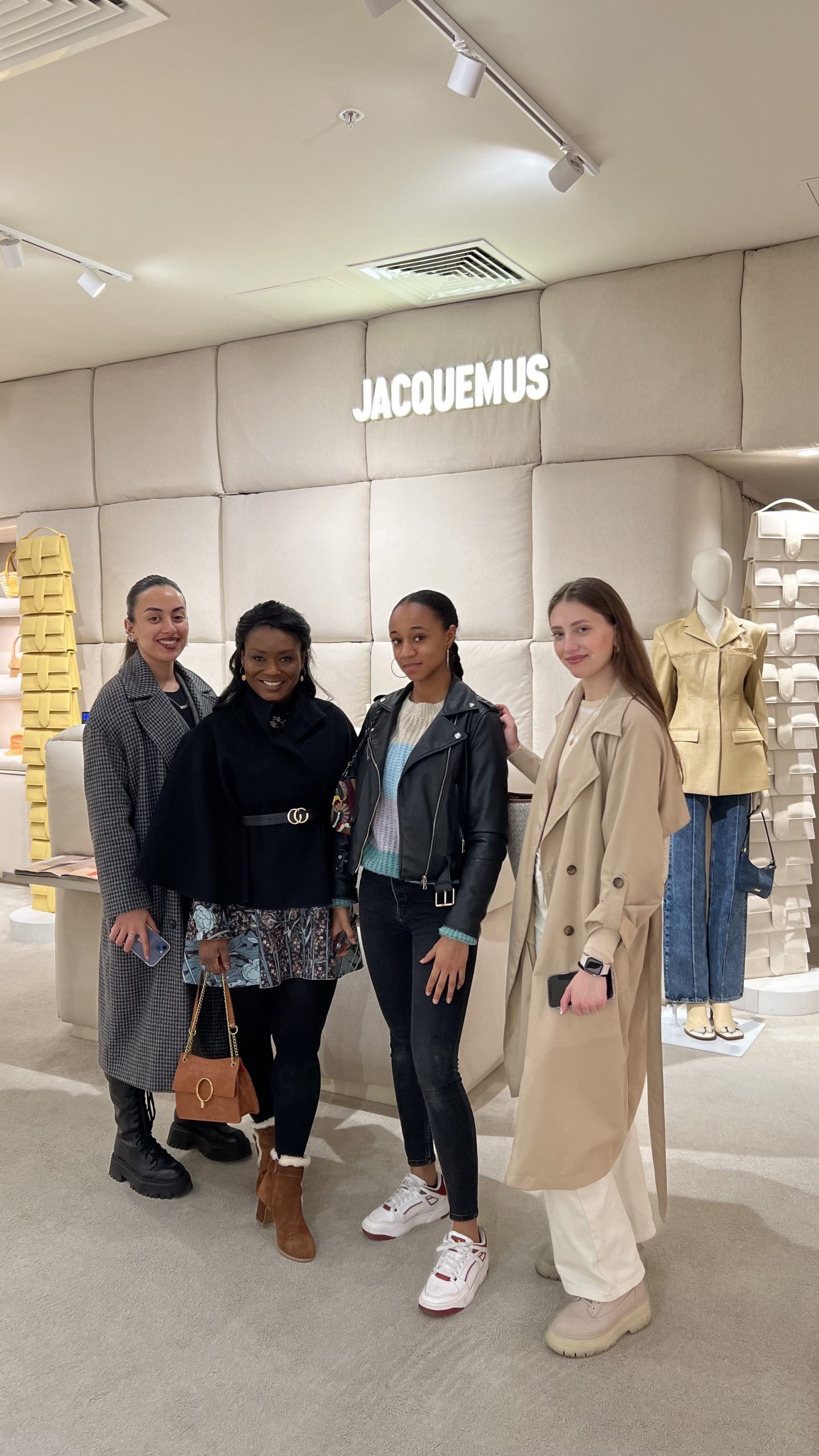
Last but not least, this program includes 3 Learning Expeditions
1st year: Design & Art: Amsterdam (1 week)
2nd year: Luxury: Milan (1 week)
3rd year: Fashion: New York (2 weeks)
The advantages of the Bachelor LUXE
State-recognized level 6 qualification
Global management training with a luxury specialization
Courses taught by industry professionals. Workshops with prestigious Houses to perfect your understanding & expertise of the Luxury, Fashion & Beauty Industry.
Learn Italian as LV2, a prestigious language of art, fashion, beauty and luxury, in addition to English (optional class open subject to a sufficient number of students).
Work-study or initial training throughout the curriculum.
Training takes place over 400 hours per year, either on a sandwich course or as part of an initial training program, with internships for initial students:
2 months in 1st year
2 months in 2nd year
6 months in 3rd year
The course lasts 400 hours a year, either on a sandwich course or as an initial training course, with internships for initial training students:
Further studies
Job opportunities
Les diplômés du Bachelor Luxe – Responsable Marketing et Commercial peuvent exercer en France comme à l’étranger, dans des PME/TPE ou des multinationales. Ce titre débouche entre autres sur les métiers suivants appliqués au secteur du luxe :
Chef de promotion des ventes
Animateur de réseau de distribution
Conseiller clientèle
Responsable de rayon / de catégorie
Chef de projet marketing
Chef de projet digital
Fashion, haute couture, modeling, beauty, perfumes, jewelry, leather goods, high-end products, means of transport, hotels and gastronomy, the luxury field is rich and varied and opens up a wide range of possibilities to all learners who want to make their mark in it.
To be able to work in a luxury company, and beyond having the character traits and personality to convince, it is essential to master all the marketing and sales issues of the target brand, but also to understand and grasp the expectations of customers in the world of luxury.
How to become an expert in luxury marketing
Whether you want to become a model, work in the world of fashion and beauty, participate in the development of a major brand, and more generally make luxury your area of expertise, it's imperative to acquire the essential rudiments to navigate this universe and master the subtleties inherent in this business sector.
Choosing to follow a course of excellence at a school renowned for the quality of its teaching and its innovative approach to learning about luxury is the only way to anchor yourself in this approach and make a success of your professional project.
The International College For Models in Paris is an institute offering Bachelor's or BTS training in the various luxury fields of art, culture, fashion, beauty and design.
The recruitment requirements of the major brands are very high, and require a specialized education perfectly tailored to the expectations of the industry's professionals, as well as training in savoir-vivre and interpersonal skills, so as to be able to integrate naturally as a luxury marketing expert with the world's leading fashion designers, jewelers, modeling agencies, perfumers and all luxury companies in general.
That's why at our IC for Models institute in Paris, we support our learners to help them grasp all the codes of the luxury professions.
How do I get into the IC For Models luxury school in Paris?
The Bachelor's degrees we offer at our luxury professions training institute in Paris are accessible after the baccalauréat, giving you access to training up to bac+3 depending on your choice and direction.
When you join our fashion, beauty, art and culture school, you'll benefit from personalized support that puts your professional project at the heart of your career goals and personality.
Our teaching is entirely geared towards your success, providing you with all the notions that will lead to your employability with players in the luxury industry.
Simply contact the teaching team at IC for Models in Paris, and we'll invite you to submit your application, along with a few details about your motivations, so that we can consider your admission.
Depending on the places still available,IC for Models accept your application throughout the year.